
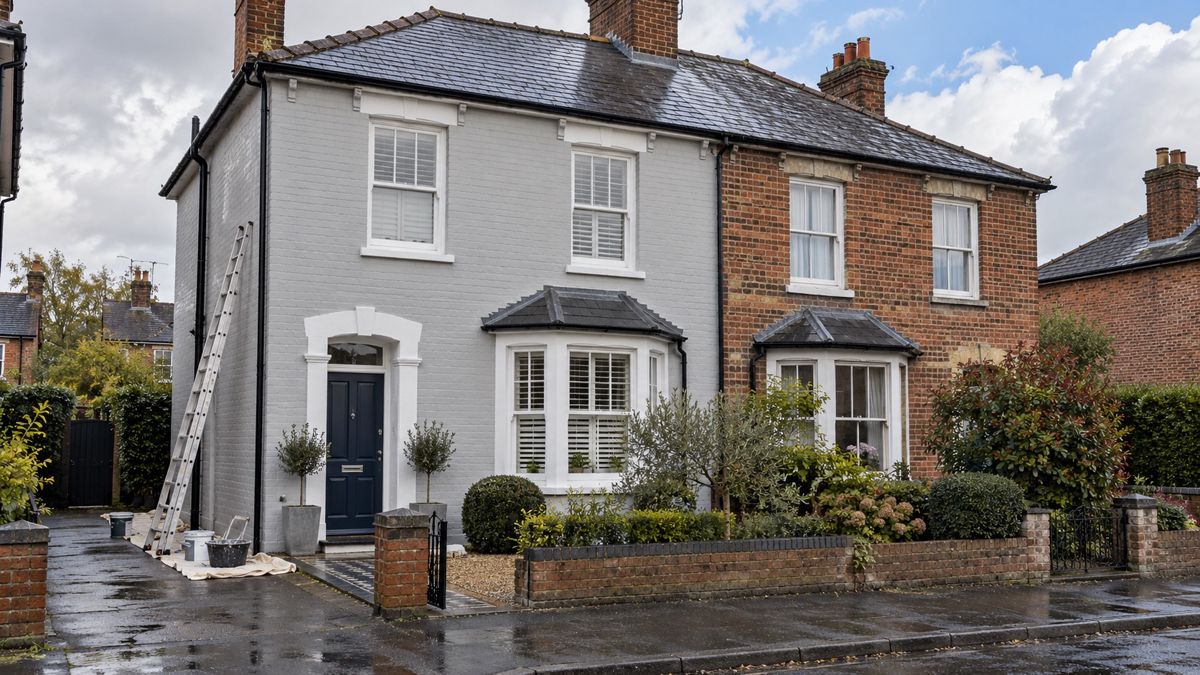
The honest answer is that it depends on the house. As a rough guide across the UK, repainting the outside of a typical home often falls somewhere between £1,000 and £6,000, with most semis and terraces sitting in the lower to middle part of that range. The figures below are general market guides, not quotes from Gloucester Painting. Your own price depends on size, condition and access.
This article explains what moves the price up or down, so you can read a quote with confidence and spot the gaps in a cheap one.
What affects the cost of exterior painting?
Four things do most of the work in any price.
- Size of the house. More wall area, more windows and more woodwork all mean more hours.
- Condition of the surfaces. Flaking paint, failed render, rotten timber and green algae all need dealing with before a single coat goes on.
- Access. A bungalow can be reached from a ladder. A three-storey Victorian townhouse needs scaffolding or a tower.
- The paint system. Cheap masonry paint and premium breathable paint are very different in cost, and so are the coats of primer under them.
Preparation is the part people tend to underestimate. On older houses, preparation can take as long as the painting itself, and it is the main reason one quote is higher than another.
What are typical price guides by type of house?
These are broad UK guides for painting walls, windows, fascias and doors, usually with the paint included. They are rough guides only.
- Small terrace: roughly £1,000 to £2,500.
- Semi-detached house: roughly £1,500 to £3,500.
- Detached house: roughly £2,500 to £6,000 or more.
Scaffolding is often priced separately and can add several hundred pounds, sometimes more than a thousand on a tall or awkward property. Repairs to timber, render or gutters are normally extra as well. A painter who has not looked at the house cannot give you a reliable figure, so be wary of a price quoted over the phone.
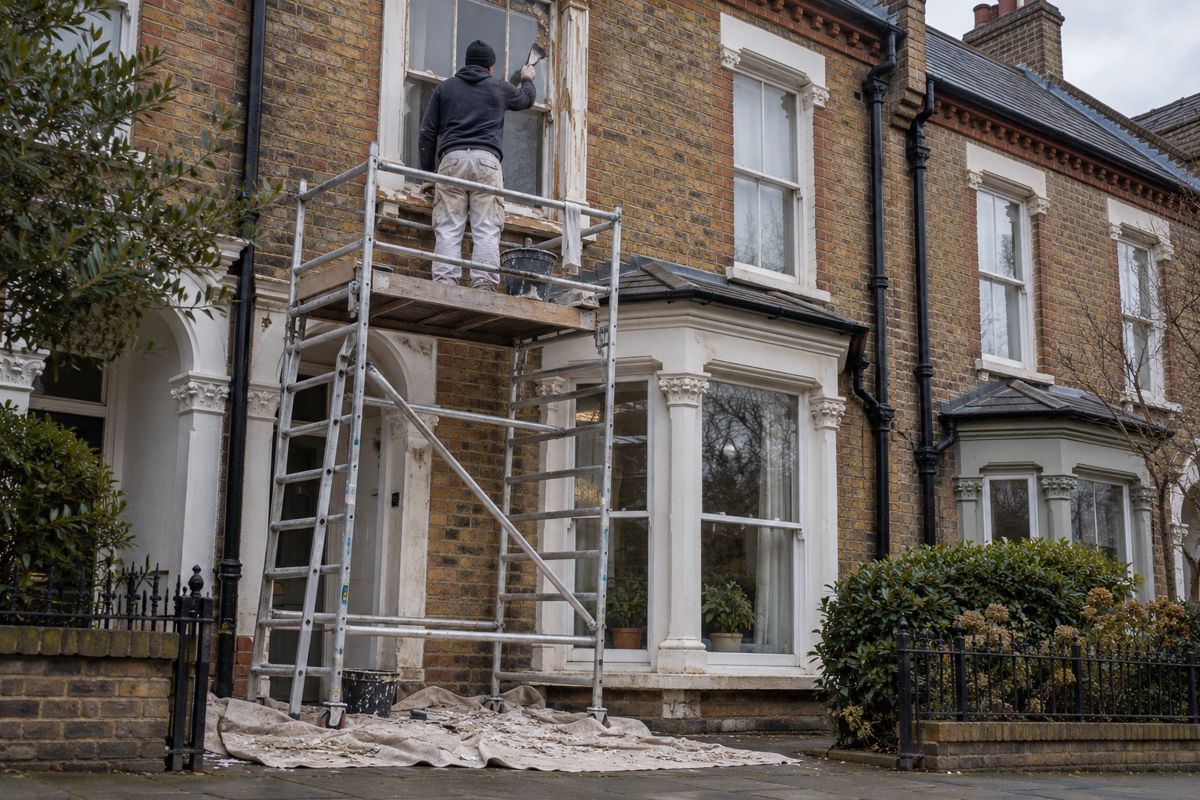
Why do older Gloucester houses cost more to paint?
Gloucester has a lot of older property. There are Victorian and Edwardian brick terraces in areas such as Tredworth, Linden and Kingsholm, plus 1930s semis in Hucclecote and Longlevens. These homes tend to need more preparation than a newer build.
- Old paint layers on sash windows and fascias often need scraping back, and sometimes more. Homes built before the 1960s may have lead paint, which needs careful handling and should never be dry sanded.
- Solid brick and stone walls need to let moisture out. Using the wrong paint can trap damp and cause blistering. A breathable masonry paint is often the better choice on older walls.
- Cement render and pebbledash can crack and blow over time. Repairs have to be done and dried before painting.
Newer estates in places like Quedgeley and Abbeymead usually have simpler surfaces, which can mean fewer hours on preparation.
Does the Gloucestershire weather change the price?
It changes the timing more than the price, but both matter. The Severn Vale is a wet part of the country, and outdoor paint needs a dry surface and mild temperatures to cure properly. In practice, many exterior jobs are planned between late spring and early autumn.
Timing can also affect cost indirectly. Spring and summer are the busiest months for outside work, so booking early gives you more choice of dates and time to agree the details without pressure. A job squeezed into a poor weather window is more likely to need repairs later, which costs more in the long run.
A good painter will not rush a job into a damp week. Delays for rain are normal and a sensible quote should say how weather days are handled. North-facing walls and shaded areas stay damp for longer and often have green growth that needs washing off first. That cleaning step is a normal part of the work, and it should appear in your quote.
Do I need permission to paint my house?
For most ordinary homes repainting in the same colour does not need any permission. Things change if the house is listed, sits in a conservation area, or has rules attached to it, such as a lease or an estate covenant. Parts of Gloucester are conservation areas, and some listed buildings have restrictions on colours and materials.
Consents can vary, so check with Gloucester City Council before changing the colour or painting bare brick or stone, especially on a period property. If you rent the house out, or you are a leaseholder, check with your landlord or freeholder too.
How can I compare exterior painting quotes fairly?
Ask every painter to quote for the same list of work, then compare line by line. A good quote usually names these items:
- The surfaces to be painted, including windows, doors, fascias, soffits and gutters.
- The preparation, such as washing, scraping, filling and sanding.
- The paint type and number of coats.
- Scaffolding or access equipment, and who pays for it.
- Repairs that are included or excluded.
- How rain delays and tidying up are handled.
Ask to see a contractor's licence and insurance cover where they are relevant to the work, and ask for the quote in writing. A very low price often means thin preparation or a single coat. That may look fine for a season and then fail early.
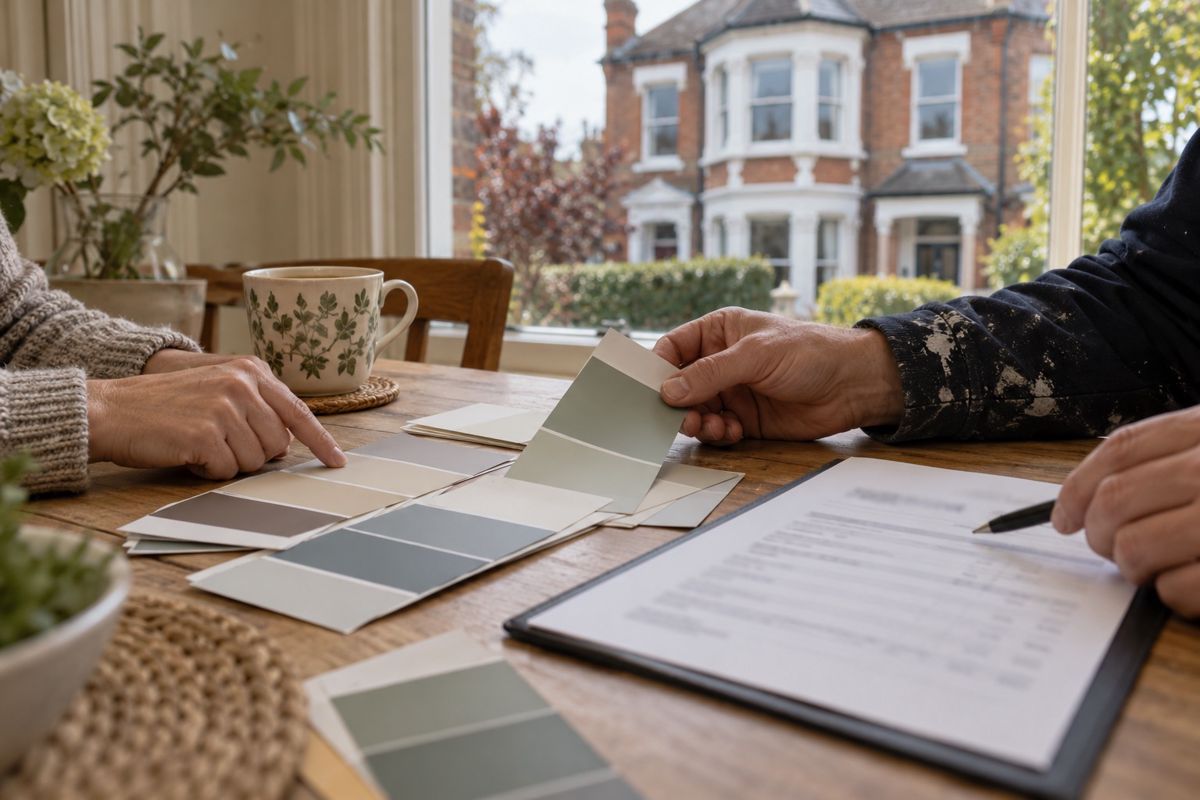
When should I get a quote for exterior painting?
The best time to start planning is when paint begins to flake, wood starts to look bare or the walls turn green. Painting sooner is usually cheaper than waiting until timber has rotted and needs replacing.
If you are ready to find out what your own house would cost, read more about our exterior house painting service in Gloucester, then call 01632 960611 to describe the job. You can also look at our interior painting page if you are planning to freshen the inside at the same time.