
Skip to content
  • Free written quotes
  • Local painters
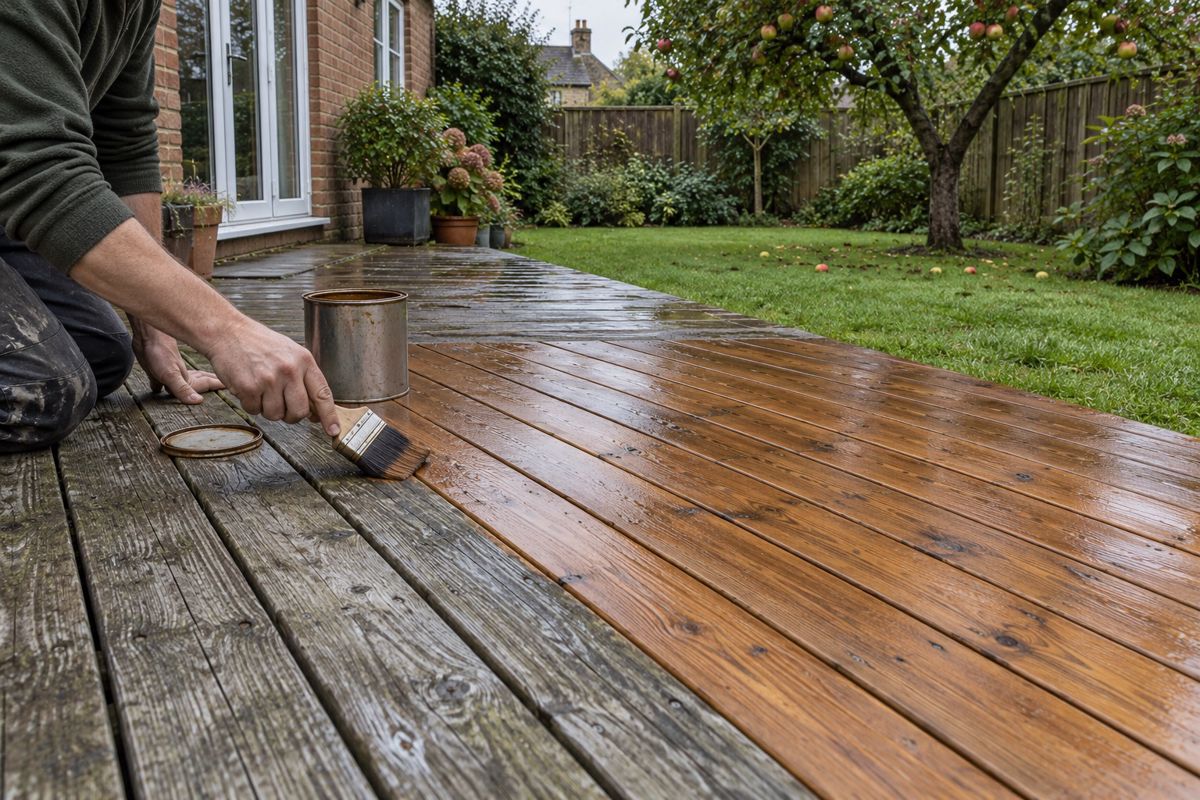
Half-stained timber garden deck with a brush resting on the boards

Deck staining in Gloucester

Deck staining in Gloucester for wet British weather

Clean, restore and protect garden decking and timber so it stands up to rain, shade and frost. Tell us about your deck and we will explain the steps.

  • Cleaning and sanding first
  • Stain, oil or sealer advice
  • Decking, fences and pergolas

What does deck staining and wood sealing involve?

Deck staining protects timber from rain, sun and frost, and brings back the colour of the wood. Done properly, it takes more than a quick coat of stain.

The usual steps are:

  1. Sweep the boards and clean between them.
  2. Wash with a decking cleaner to remove algae, moss, grease and old grey weathering.
  3. Let the wood dry fully. This step matters most in the UK, where boards stay damp for days.
  4. Sand rough areas, check screws and nails, and replace or fix loose or split boards where possible.
  5. Apply stain, decking oil or a sealer by brush, working along the boards and following the grain.

Two thin coats generally work better than one thick coat, which can stay tacky and peel. The same method can be used for garden fences, pergolas, sheds and timber balconies.

What causes decking problems in Gloucester gardens?

Gloucester sits in the Severn Vale, which is mild but wet. Gardens in the city and in nearby areas like Quedgeley and Churchdown can stay damp for long stretches, especially in shade or on low-lying ground. That is hard on garden timber.

  • Green algae and moss. These make boards slippery and hold water against the wood.
  • Grey, dry weathering. Sunlight breaks down the surface fibres of untreated timber.
  • Split and warped boards. Repeated wet and dry cycles move the wood.
  • Failed old coatings. Paint or stain that is peeling needs to be taken back before new product goes on.

Many gardens in older Gloucester terraces are small and shaded by walls and fences. That means less drying time and a good case for regular cleaning. Composite decking does not normally need staining, so check what you have first.

Which is better, stain, oil or paint for decking?

There is no single answer. It depends on the wood, how you use the deck and how much upkeep you want.

Decking oil

Soaks in and feeds the wood. It looks natural, but it often needs refreshing each year or two.

Decking stain

Adds colour and a protective film, and can last longer on busy areas. It must be applied to clean, dry timber to avoid peeling.

Decking paint

Gives solid colour and can hide old, patchy boards. It forms a thicker surface and wear will show over time, so it needs touching up in the busiest places.

Hardwood and pressure-treated softwood take products differently. Ask what is on your deck now, because mixing the wrong types can lead to peeling and patchy results.

We do not publish fixed prices, since decks vary a great deal. These are the factors that matter.

  • Area of decking. Bigger decks take more cleaning, drying and coating.
  • Condition. Moss, old failed coatings and rough boards add preparation time.
  • Repairs. Replacing boards or fixing the frame is extra.
  • Extras. Steps, handrails, balustrades, fences and pergolas add to the quote.
  • Product choice. Some stains and oils cost more than others.
  • Access. A deck on a raised or awkward site takes longer to work on.

It can be sensible to book garden work alongside other jobs. If you are also painting the outside of the house, see our exterior house painting page, or our interior painting page for the inside.

How long does it take and when should I book?

Time depends on the size of the deck and how long the timber takes to dry. The work itself is fairly quick, but you cannot hurry the drying. We would not give a number of days before looking at your boards.

The best window is a dry spell between late spring and early autumn. Stain needs a dry surface and no rain for a while afterwards. Cold, damp mornings and heavy dew are the usual reasons for delays. Plan for the possibility of a rain day.

On the day, move furniture and pots off the deck, and keep children and pets away until the surface is dry. Plants nearby are covered before work starts.

Book when boards turn green or grey, or when water no longer beads on the surface. Our home page shows everything else we cover.

Free written quotes
Local painters
Careful prep
Tidy finish

How it works

Tell us about the job

Rooms or exterior, colours and timing.

Visit and written quote

We measure and price it in writing.

Prep, paint, tidy up

Floors and furniture protected, clean lines, cleanup.

Step 1 of 3

What needs painting?

Questions about painting in Gloucester

How often should decking be stained?

It varies with the product, the wood and how exposed the deck is. Oils tend to need refreshing more often than stains. Sunny, open decks wear differently from shaded, damp ones. A simple test is to splash water on the boards. If it soaks in rather than beading, the protection is wearing thin and it is time to plan the work.

Can you stain a deck in the rain or in winter?

Not well. Stain and oil need dry timber and mild weather to soak in and cure. Applying in the wet, or just before heavy rain, leads to patchy results and peeling. We plan staining for dry spells, usually between late spring and early autumn, and cleaning and repairs can happen earlier in the year.

Do you remove old stain or paint first?

If the old coating is peeling or patchy, yes. New product will not stick well to a failing layer. Removal can be done with sanding, stripping products or a careful wash, depending on what was used before. If the old coating is sound, it may only need cleaning and a light key before the new coat.

Can you stain composite decking?

Composite boards are usually made not to need staining, and most stains will not hold on them properly. If composite decking has become dirty or faded, cleaning is normally the right step. If you are unsure what material you have, send a photo and we can help work it out.

Is decking safe to walk on after staining?

Only once it is fully dry. Wet stain is slippery, and it can mark shoes and pets. The drying time depends on the product and the weather, so follow the instructions on the tin and our advice on the day. Cleaning off algae before staining also makes boards less slippery in the long run.

Can you stain fences and sheds as well?

Yes, the same approach works for garden fences, sheds, pergolas and timber balconies. They need to be dry and clean, and the right product for exterior timber should be used. If you want several areas done together, mention them on the first call so the quote lists each one separately.

Ready when you are

Call now or request a quote online.

01632 960611