
Skip to content
  • Free written quotes
  • Local painters
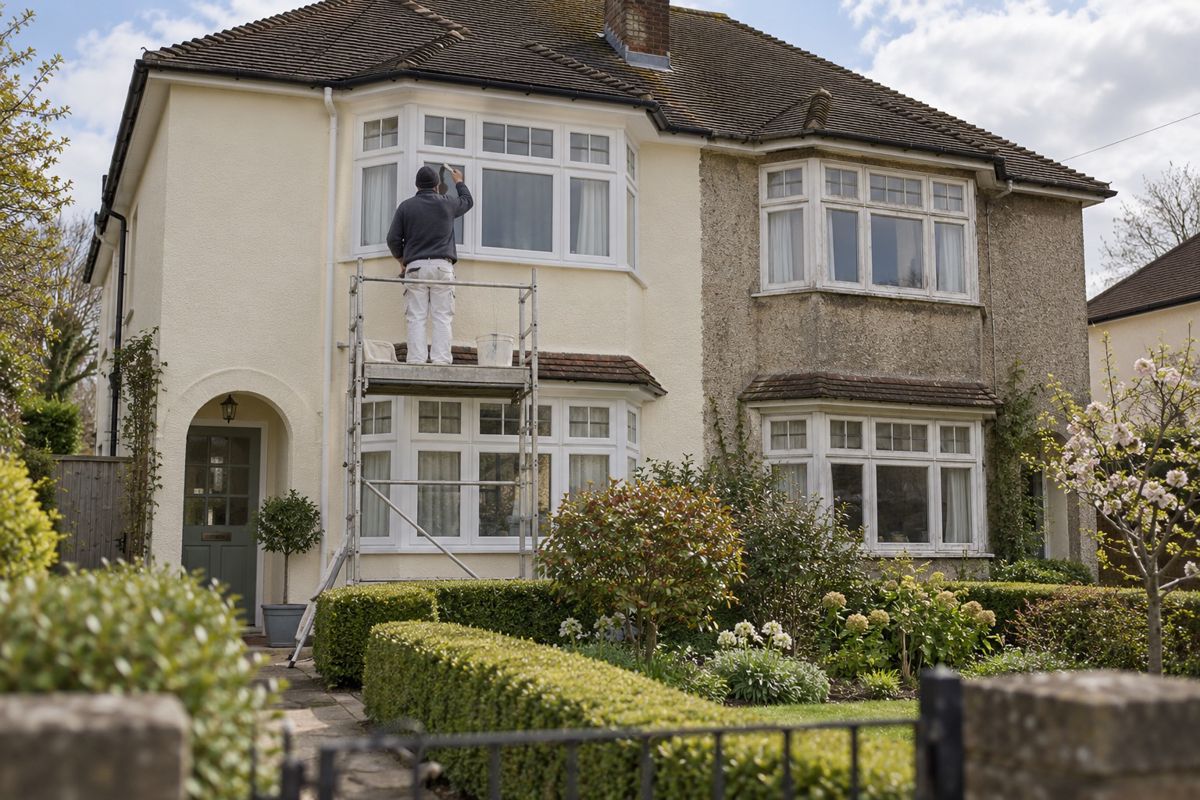
Painter on a platform tower repainting the front of a 1930s semi

Exterior painting in Gloucester

Exterior house painting in Gloucester, done for the weather

Careful preparation, the right paint for older walls and tidy working. Tell us about your house and we will explain the options.

  • Brick, render, stone and timber
  • Preparation explained up front
  • A clear quote you can compare

What does exterior house painting involve?

Exterior house painting is mostly preparation, with the paint going on at the end. A typical job covers the walls, the windows and frames, the fascias and soffits, the front door and often the gutters and downpipes.

The usual order is:

  1. Wash the surfaces to remove dirt, algae and loose material.
  2. Scrape back flaking paint and sand rough edges.
  3. Repair small cracks and holes, and replace or fill rotten timber where it can be saved.
  4. Prime bare areas and any repairs.
  5. Apply the finishing coats, normally two on walls, with a careful finish on the woodwork.

Skipping the early steps is what makes paint peel within a season or two. When you compare quotes, look at how much of the price is for preparation, not just the paint itself.

What problems are common on Gloucester houses?

Gloucester homes face wet, mild weather for much of the year, and many of them are old. A few problems come up again and again.

  • Failed paint on sash windows and fascias. Old layers crack and let water into the timber.
  • Cracked or blown render and pebbledash. Common on 1930s semis in areas such as Hucclecote and Longlevens. Water gets behind the render and pushes it off the wall.
  • Damp in solid brick walls. Victorian and Edwardian terraces have no cavity. The paint needs to let moisture out. Painting over a damp wall with a hard, sealed coat can trap water and cause blistering.
  • Green growth. North-facing walls and shaded areas often grow algae that must be washed off first.

If your house dates from before the 1960s, the old woodwork may carry lead paint. It should be treated carefully and never dry sanded. Mention it when you call so the preparation can be planned for.

Do I need permission to paint a listed or conservation area house?

For most ordinary houses, repainting in the same colour does not need any permission. Things can change depending on the property.

Parts of Gloucester are conservation areas, and the city has many listed buildings. In these cases, changing the colour, or painting brick or stone that has never been painted, may need consent. Some areas also have extra controls on changes to the outside of homes. The rules differ from street to street, so it is wise to check with Gloucester City Council before you choose colours.

Leaseholders and tenants should also check with the freeholder or landlord, and some modern estates have covenants about colours.

If you are not sure, ask us when you call. We can describe the work and you can then check with the council before anything is booked.

We do not publish fixed prices, because two houses that look alike can need very different amounts of work. These are the main things that move a quote up or down.

  • Size and height. A small terrace is quicker than a tall detached house.
  • Condition. More flaking, cracking and rot means more preparation.
  • Access. Scaffolding or a tower adds cost, and it is often quoted separately.
  • Number of windows and amount of woodwork. Detailed joinery takes much longer than flat wall.
  • Paint choice. Breathable masonry paint for older walls costs more than a basic one, and it is often worth it.
  • Repairs. Replacing a rotten sill or repairing a gutter is extra to the painting.

We can also look at the inside of the house for you, as covered on our interior painting page, and put the two jobs together if that suits you.

How long does it take, and when should I call?

The time depends on the size of the house, the amount of preparation and the weather. A small terrace is a shorter job than a large detached house. Anything we say before seeing your property would only be a guess.

Outside painting works best between late spring and early autumn. Paint needs a dry surface and mild temperatures, so rain, heavy dew and cold mornings can cause delays. A sensible plan allows for a few weather days.

On the day, expect the crew to cover plants and paths, set up access and start with the washing and scraping. Windows may be closed for a while, and there will be some noise.

Call when paint starts to flake, bare wood shows, or the walls turn green. Catching it early is normally cheaper. If your garden needs attention too, see our deck staining page. You can also go back to our home page to see everything we offer.

Free written quotes
Local painters
Careful prep
Tidy finish

How it works

Tell us about the job

Rooms or exterior, colours and timing.

Visit and written quote

We measure and price it in writing.

Prep, paint, tidy up

Floors and furniture protected, clean lines, cleanup.

Step 1 of 3

What needs painting?

Questions about painting in Gloucester

How often does the outside of a house need repainting?

There is no fixed number. Masonry usually lasts longer than windows and fascias, which take the worst of the rain. A house in a sheltered spot lasts longer than one facing the prevailing weather. Look for flaking, bare timber, chalky walls or green growth. Those are signs that it is time to plan the work, before water gets into the structure.

Can you paint brick that has never been painted?

It is possible, but it is a big decision. Once brick is painted it is hard to reverse, and a poor choice of paint can trap moisture in the wall. On older Gloucester terraces it is often better to leave brick as it is. In a conservation area or on a listed building, you may need consent first, so check with the council.

What paint do you use on older walls?

On older solid walls, a breathable masonry paint is often the right choice, because it lets moisture escape. On modern render a standard masonry paint can be fine. The right answer depends on what is on the wall now, so we look at the surface first and explain what we suggest and why before you decide.

Do I need scaffolding for exterior painting?

Not always. Many jobs on bungalows and two-storey houses can be done from ladders and a low platform tower. Taller houses, steep roofs or awkward gardens may need scaffolding. It is a safety question as well as a cost question, and it should be listed clearly in your quote so you can see who is paying for it.

What if it rains during the job?

Painting stops when the surface is wet or rain is likely. This is normal in the Severn Vale and is allowed for in the planning. Paint put on in the wet fails early, so pausing is the right call. Interior or sheltered work may sometimes continue, and we will tell you what the plan is for the day.

Should I get the windows and fascias done at the same time?

Usually yes. The scaffolding or tower is already in place, and the woodwork often needs attention as much as the walls. Painting the walls and leaving tired fascias would leave the house looking uneven and does not protect the timber. Ask for the work to be priced as walls, joinery and fascias separately so you can decide.

Ready when you are. Call now or request a quote online.