
Skip to content
  • Free written quotes
  • Local painters
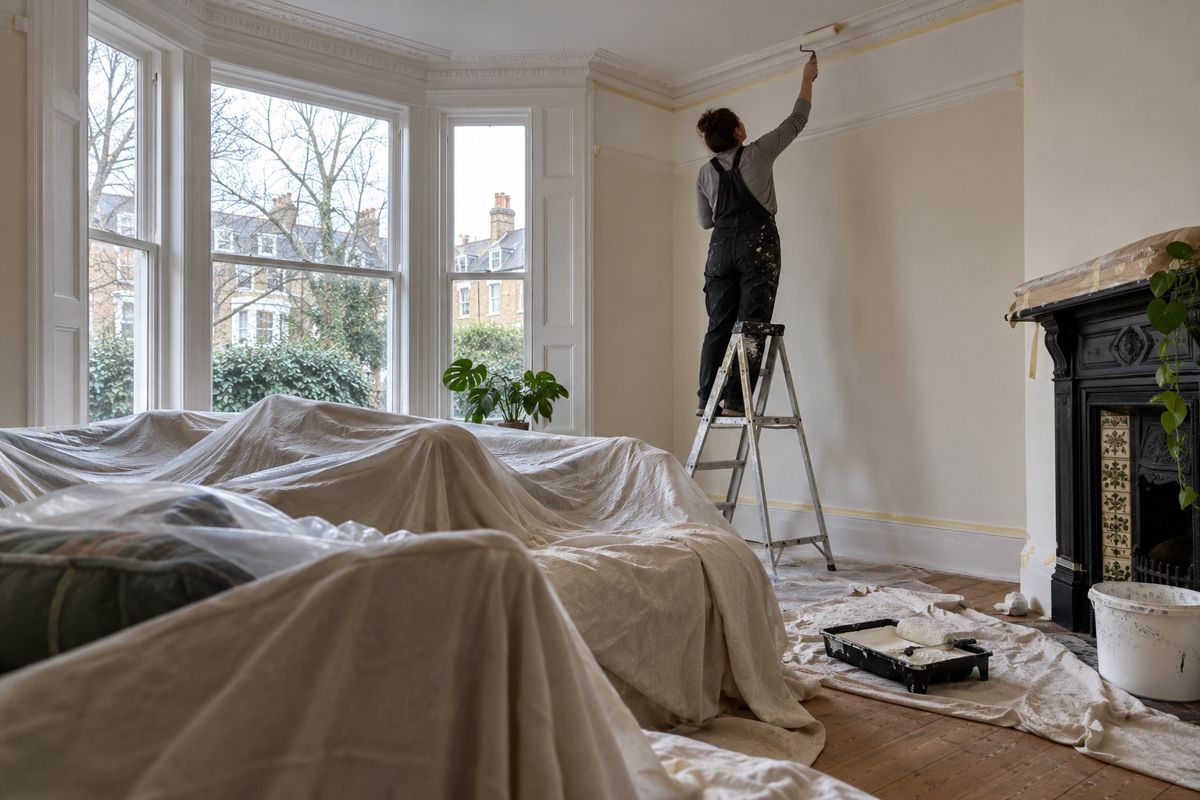
Victorian front room being repainted with furniture covered and woodwork masked

Interior painting in Gloucester

Interior painting in Gloucester, one room or the whole house

Walls, ceilings and woodwork finished with care, in homes from Victorian terraces to newer estates. Tell us about your rooms and we will explain the steps.

  • Furniture and floors protected
  • Cracks and old plaster dealt with
  • Colour and finish advice

Step 1 of 3

What needs painting?

What does interior painting involve?

Interior painting is more than rolling a colour onto a wall. A proper job starts with protecting the room. Floors are covered, furniture is moved to the middle and sockets and fittings are masked or removed.

Then comes the preparation. Cracks and holes are filled, rough areas are sanded smooth, stains are sealed and loose or flaking paint is scraped back. New plaster needs a thinned first coat so that it does not soak up the colour. Bare wood and metal need primer.

After that, the ceilings are done first, then the walls, then the woodwork such as skirting boards, doors and window frames. Most surfaces get two coats. Ceilings and woodwork often need a different finish from walls.

Clean edges, covered fittings and thorough tidying at the end make the biggest visible difference to a finished room.

What problems are common in Gloucester homes?

Gloucester has plenty of older houses, and older homes bring their own challenges inside.

  • Old plaster. Victorian and Edwardian walls can be uneven, cracked or patched many times. The surface needs real preparation to look smooth.
  • Damp and condensation. Solid walls and wet winters in the Severn Vale can cause damp patches and black mould in bathrooms and corners. Painting over damp without finding the cause only hides it for a short time. Fix the cause first, then repaint.
  • Old gloss woodwork. Many skirting boards and doors have thick, yellowed layers. They need careful sanding and priming.
  • Period features. Picture rails, coving and panelled doors take time to do properly.

In homes built before the 1960s there may be lead paint under later layers. It should not be dry sanded. Tell us if you think your home may have it.

Which paint finish should I choose for each room?

The right finish makes the job last longer and look better.

Walls and ceilings

Matt emulsion hides small flaws and suits living rooms, bedrooms and ceilings. Slightly shinier finishes wipe clean more easily and suit halls, stairs and children's rooms.

Kitchens and bathrooms

Steam and splashes call for paint made for wet or high-moisture rooms. Poor choices here lead to peeling and mould spots.

Woodwork

Satin or eggshell on skirting boards, doors and frames is tough and easy to clean.

Old walls

Solid walls in older homes often do better with breathable paint, which allows moisture to escape instead of sealing it in.

If you are not sure about colours, we can talk through options and light. North-facing rooms in a terrace often look cooler and darker than you expect.

We do not give fixed prices here because every home is different. These are the main things that decide a quote.

  • Number and size of rooms. Tall Victorian ceilings mean more area and more time.
  • Condition of the surfaces. Cracked plaster, stains and flaking paint need preparation.
  • Amount of woodwork. Doors, panelling and detailed trim take longer than flat walls.
  • Colour changes. Going from dark to light usually needs extra coats.
  • Empty or furnished. An empty room is faster than one with furniture to move.
  • Paint quality. Better paint covers well and lasts longer.

It can make sense to combine inside and outside work, so see our exterior house painting page too, or our kitchen cabinet painting page if the kitchen is part of the plan.

How long does it take and what happens on the day?

One room can be quick. A whole house takes longer, and the amount of preparation changes the time more than anything else. We would not promise a number of days before looking at the work.

On the first morning the crew arrives, covers floors and furniture and sets up. Expect some dust from sanding, the smell of fresh paint and ladders in the room. Windows are often kept open for ventilation. Rooms are usually done one at a time, so you can keep using parts of the house.

Drying takes time between coats. Damp weather slows this down, especially in bathrooms.

Call before paint starts to peel or when you are about to sell or let a property. If you are planning a bigger refresh, our home page lists everything else we do, and you can reach us on 01632 960611.

Free written quotes
Local painters
Careful prep
Tidy finish

How it works

1

Tell us about the job

Rooms or exterior, colours and timing.

2

Visit and written quote

We measure and price it in writing.

3

Prep, paint, tidy up

Floors and furniture protected, clean lines, cleanup.

Step 1 of 3

What needs painting?

Questions about painting in Gloucester

Do I need to move my furniture before you start?

You do not have to move everything. Small items and anything breakable are best cleared out beforehand. The crew can move larger furniture to the centre of the room and cover it. Wall hangings, curtains and ornaments should be taken down first. Let us know about heavy pieces when you call so we can plan.

How many coats of paint will my walls need?

Most walls need two coats of finish over a prepared surface. New plaster, stained walls and large colour changes may need more. A single coat on top of an old colour often looks patchy. When you read a quote, check that it states the number of coats so you can compare like with like.

Can you paint over damp patches or mould?

Not as a fix. Painting over damp only hides it for a short time, and the stain or mould usually comes back. The cause, such as a leak, blocked gutter or poor ventilation, should be found and dealt with first. Once the wall has dried, it can be treated, primed and painted properly.

Is there anything special about painting Victorian houses?

Yes. Older walls are often uneven, and plaster can crack as the house moves. High ceilings, picture rails and panelled doors take more time. Solid walls need paint that lets moisture escape. Some homes also have old lead paint under later layers, which needs careful handling and no dry sanding.

Can you paint a rented or empty property?

Yes. Landlords and people preparing to sell often ask for this. An empty property is quicker to paint because nothing needs moving. Neutral colours and durable finishes usually suit lettings. Tell us about the timeline and keys when you call so we can discuss what is realistic.

How do I get the room ready for painters?

Clear surfaces and shelves, take down pictures and curtains, and move delicate items elsewhere. Make sure the crew has access to the rooms and a place to put materials. Tell us about pets and any areas to avoid. A little preparation on your side saves time and helps the job finish smoothly.

Ready when you are

Call now or request a quote online.

01632 960611